
Słowa kluczowe
Jak cytować
Abstrakt
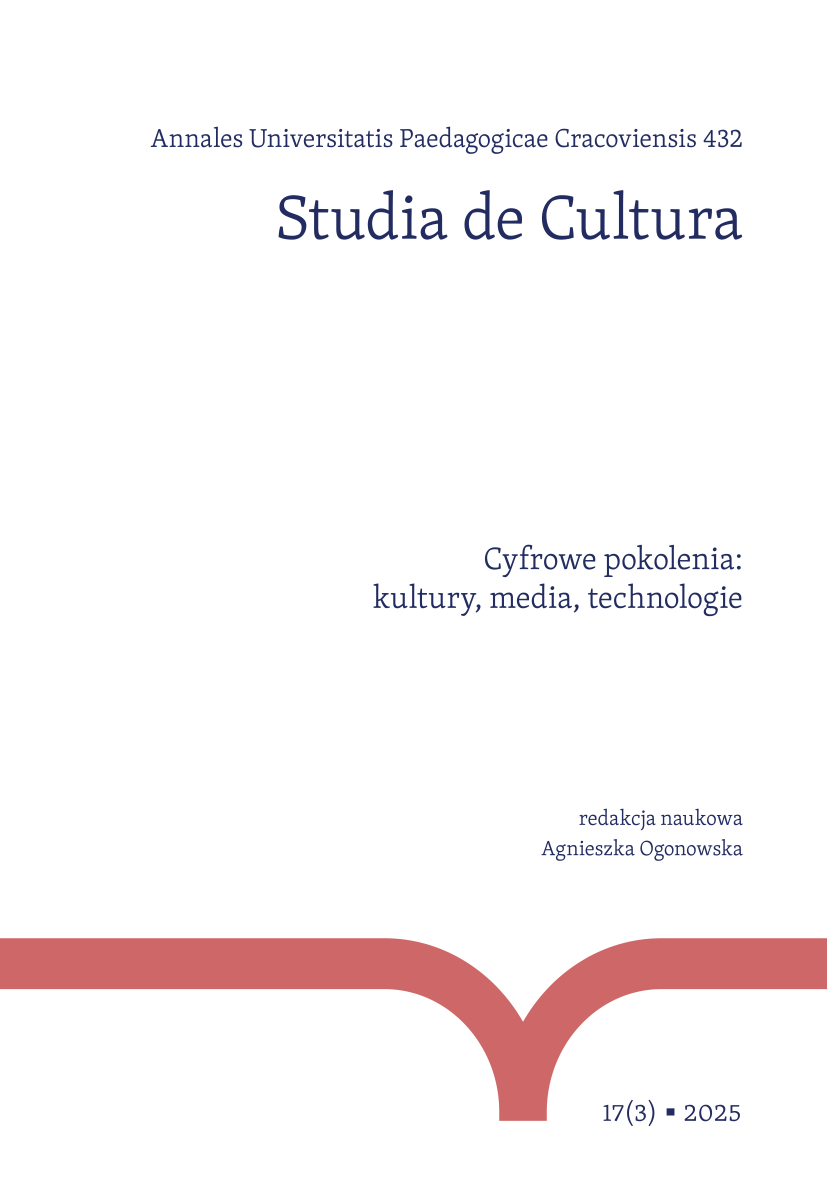
Dynamiczne przemiany społeczno-technologiczne, które dokonują się od przełomu XX i XXI wieku, nieodwracalnie zmieniły sposób funkcjonowania jednostek i zbiorowości w kulturze. Szczególnie wyraźnie widać to w analizach pokoleń wychowanych lub socjalizowanych już w epoce mediów cyfrowych – zwłaszcza tzw. pokolenia Z, które stanowi dziś nie tylko znaczącą grupę odbiorców kultury, lecz także jej aktywnych współtwórców. Współczesne „cyfrowe pokolenia” żyją w rzeczywistości, w której granice między online i offline stają się coraz bardziej rozmyte, a codzienne praktyki kulturowe i społeczne osadzone są w medialnym krajobrazie nasyconym algorytmami, platformami i sztuczną inteligencją. Niniejszy numer monograficzny stanowi próbę wieloaspektowego rozpoznania kondycji współczesnych pokoleń w kontekście ich relacji z technologiami, mediami i kulturą cyfrową. Zebrane artykuły łączą perspektywy kulturoznawcze, socjologiczne, medioznawcze i edukacyjne, ukazując nie tylko zmieniające się wzory uczestnictwa w kulturze, ale i szersze procesy transformacji tożsamości, relacji społecznych czy mechanizmów pracy i edukacji. Problematyka kompetencji cyfrowych rodziców przedstawicieli pokolenia Z (Karina Czepiec-Veltzé) ukazuje cyfrową lukę jako zjawisko międzypokoleniowe i społecznie zróżnicowane. Analiza wzorów kulturowych w polskich grupach cosplayowych (Klaudia Żubryk) pozwala dostrzec, jak praktyki fanowskie stają się przestrzenią generacyjną i kulturotwórczą. Z kolei tekst Joanny Nowickiej dotyczy zróżnicowanych postaw generacyjnych wobec pracy w sektorze TSL, co podkreśla znaczenie technologii jako czynnika redefiniującego zawodowe tożsamości. Wątki związane z przemianami kultury muzycznej i medialnymi preferencjami pokolenia Z (Mariola Kokowska, Patrícia Nagyová) rzucają światło na nowe formy doświadczania kultury dźwiękowej oraz nawyków konsumpcji medialnej w warunkach platformizacji. Kontekst edukacyjny i socjalizacyjny eksplorują autorzy tekstu poświęconego modelowi VIHARO (Györgyi Janková), wskazując na gry cyfrowe jako środowisko kształtowania kompetencji społecznych. Szczególnym przypadkiem nowomedialnych przemian jest z kolei analiza zjawiska influencerów AI (Łukasz P. Wojciechowski, Michal Radošinský, Katarína Fichnová), które uwidacznia postępujące przesunięcia w obszarze autentyczności i zaufania w mediach społecznościowych. Sekcja Varia dopełnia tematyczny zakres numeru, poszerzając kontekst o refleksję nad kulturowym obrazowaniem przyszłości i technologiczną metaforyką w serialu Black Mirror (Aleksandra Mirek-Rogowska, Kamila Rączy), jak również o recenzję książki analizującej praktyki użytkowników mediów społecznościowych (Mateusz Pasek). Wszystkie teksty zawarte w tym numerze są zaproszeniem do dalszych refleksji nad tym, jak technologie cyfrowe – jako przestrzeń życia codziennego, medium ekspresji i pole władzy – kształtują tożsamości i relacje pokoleniowe. Mamy nadzieję, że numer ten stanie się istotnym głosem w debacie nad kulturowymi wymiarami transformacji cyfrowej, której świadkami i uczestnikami jesteśmy wszyscy. Serdecznie zapraszam do lektury!
Bibliografia

Utwór dostępny jest na licencji Creative Commons Uznanie autorstwa – Użycie niekomercyjne 4.0 Międzynarodowe.
Prawa autorskie (c) 2026 Annales Universitatis Paedagogicae Cracoviensis | Studia de Cultura